Post Collagen Crosslinking Haze
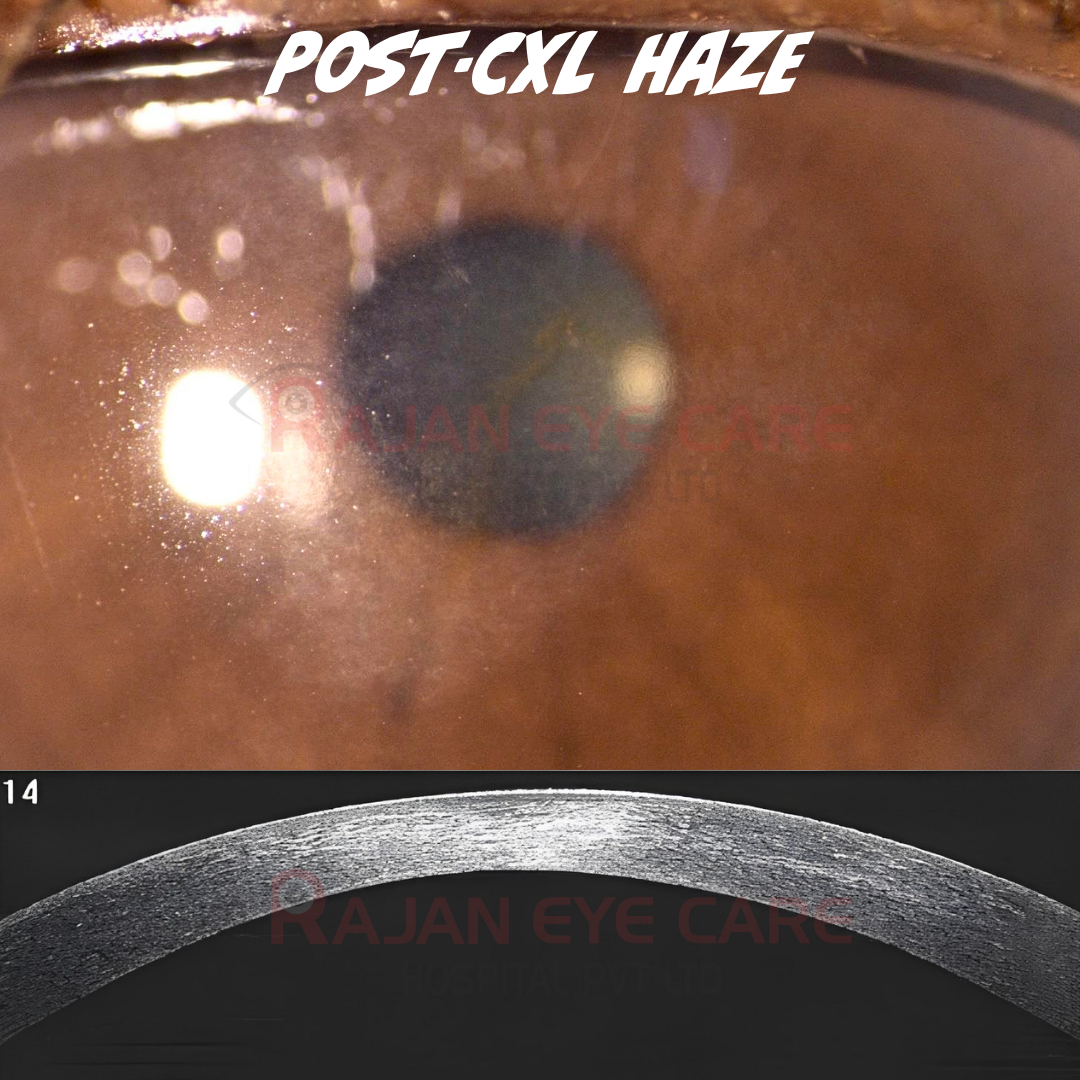
• One of the most common complications post-CXL is stromal corneal haze.
PATHOPHYSIOLOGY
• In vitro and ex vivo studies show that CXL leads to an immediate loss of keratocytes in the corneal stroma
• In a confocal microscopy study, Mazzotta et al. found that in eyes with keratoconus, activated keratocytes repopulated the corneal stroma starting at 2 months and that the repopulation was almost complete at 6 months
• These activated keratocytes can contribute to the development of CXL-associated corneal haze.
• Other factors that may contribute to CXL-associated corneal haze include stromal swelling pressure changes, proteoglycan-collagen interactions and glycosaminoglycan hydration.
• The intact corneal epithelium can also play an important role in prevention of corneal haze.
• Razmjoo et al, proposed that partial removal of the cornea and leaving the central portion of the cornea intact could improve the outcome of CXL, but finally they founded that keeping the central corneal epithelium intact was not beneficial for decreasing corneal haziness, however, this method caused better improvement in corrected vision
PRK HAZE VS CXL HAZE:
• Depth of the haze, in case of PRK, it is strictly sub epithelial while CXL haze extends into the anterior stroma to approximately 300 um of depth.
TREATMENT:
• From the third month after procedure, there is a significant decrease in CXL-associated corneal haze which usually does not require treatment except for some low dose steroids
• From 6 months to 1 year postoperatively, the haze can decrease further
• Typically late permanent scarring should be differentiated from the early postoperative temporary haze which is often paracentral and compatible with good visual results
• It may not be actually related to CXL itself but rather to the ongoing disease process and corneal remodeling
Image from Rajan Eye Care Hospital
#ophthalmology #ophthal #doctor #health #medical #vision #education #optometry #medicalstudent #optometrist #medicine #eye #ophtho #ophthalmologist #ophthalmo #med #medicaleducation #ophthalmologyresident #ophthalmologyresidency #apaoyo #cornea #keratoconus #collagencrosslinking #cxl #c3r #cxlhaze
