Pan-retinal Photocoagulation
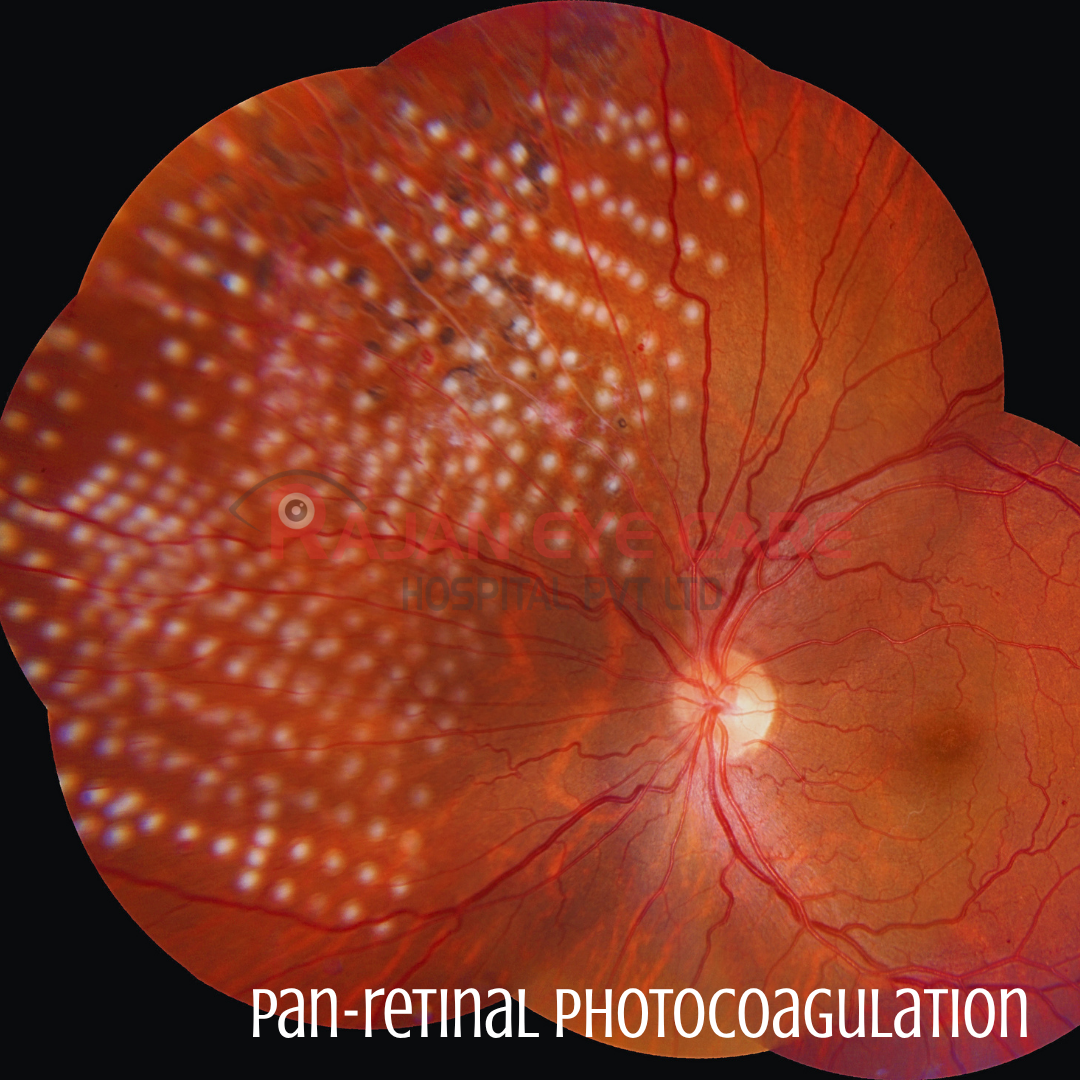
●PRP is typically delivered through either a slit-lamp system or laser indirect ophthalmoscope
INDICATIONS:
●PDR
●Severe NPDR
●Retinal ischemia
●Retinal neovascularisation
●RVO
PURPOSE
●PRP shrinks abnormal vessels to prevent severe VH and RD
●It is considered a definitive treatment to save central vision, rather than improve it
PROTOCOLS
1) Long-duration conventional treatment
●Pulse durations of 100 milliseconds, large spot size (200μ-500μ), with 200-250 mW of power applied
2) Short-duration treatment
●The speed of delivery allows newer lasers to reduce the pulse duration to 10-30 milliseconds per spot, which is balanced by many more total spots (often 3000-5000)
3) Navigated PRP
●Works by tracking retinal eye movements in real time using computers
●The computer and laser automatically readjust in accordance with the movement of the eyes.
●Can be either single-spot or pattern-spot arrays that reach all the way to the peripheral retina. ●It can be of short or long duration and can have higher accuracy
4) Sub-threshold diode micropulse
●SDM was originally targeted toward combatting DME
SESSIONS
●Multiple sessions (often 3–4) may be needed to cover the entire retina, usually separated by a few weeks
ADVERSE EFFECTS
●If the patient cannot tolerate contact-lens delivered PRP, laser can be performed using an IDO
●Some permanent decreases in peripheral, colour, and night vision.
●If there are increase in flashes, floaters, pain, redness, a significant decrease in vision, or the sensation that their field of vision is obscured by black curtain, they should call their doctor immediately
●Choroidal effusion (rare)
Image from Rajan Eye Care Hospital
Visit our website www.ophthalmobytes.com
#ophthalmology #ophthal #doctor #health #medical #vision #education #optometry #medicalstudent #optometrist #medicine #eye #ophtho #ophthalmologist #ophthalmo #med #medicaleducation #ophthalmologyresident #ophthalmologyresidency #apaoyo #diabeticretinopathy #pdr #npdr #panretinalphotocoagulation #prp #laser
